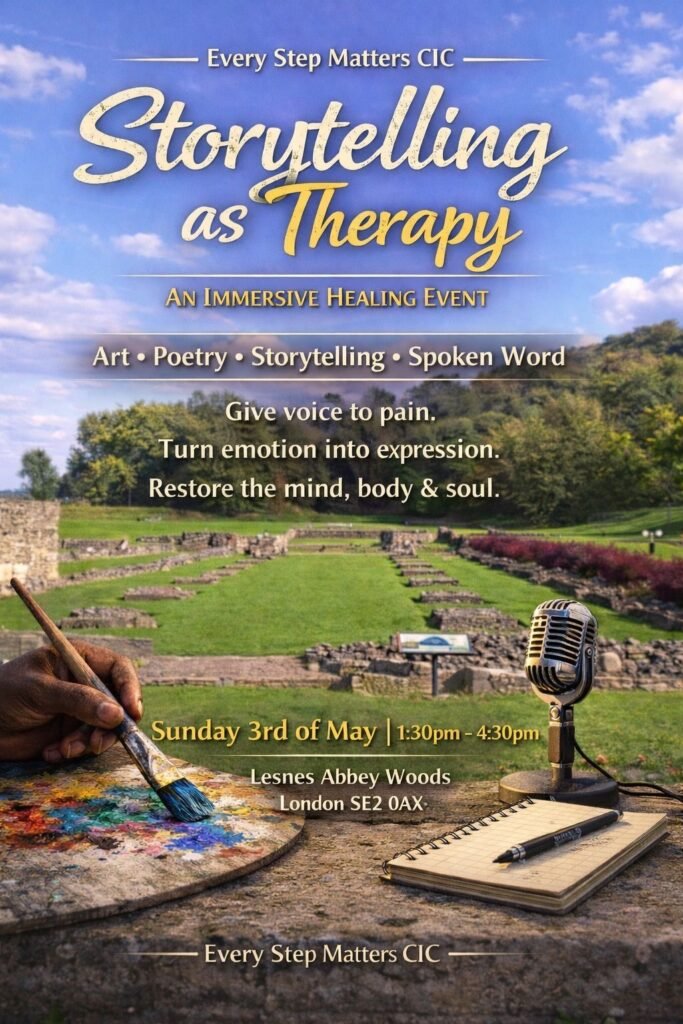
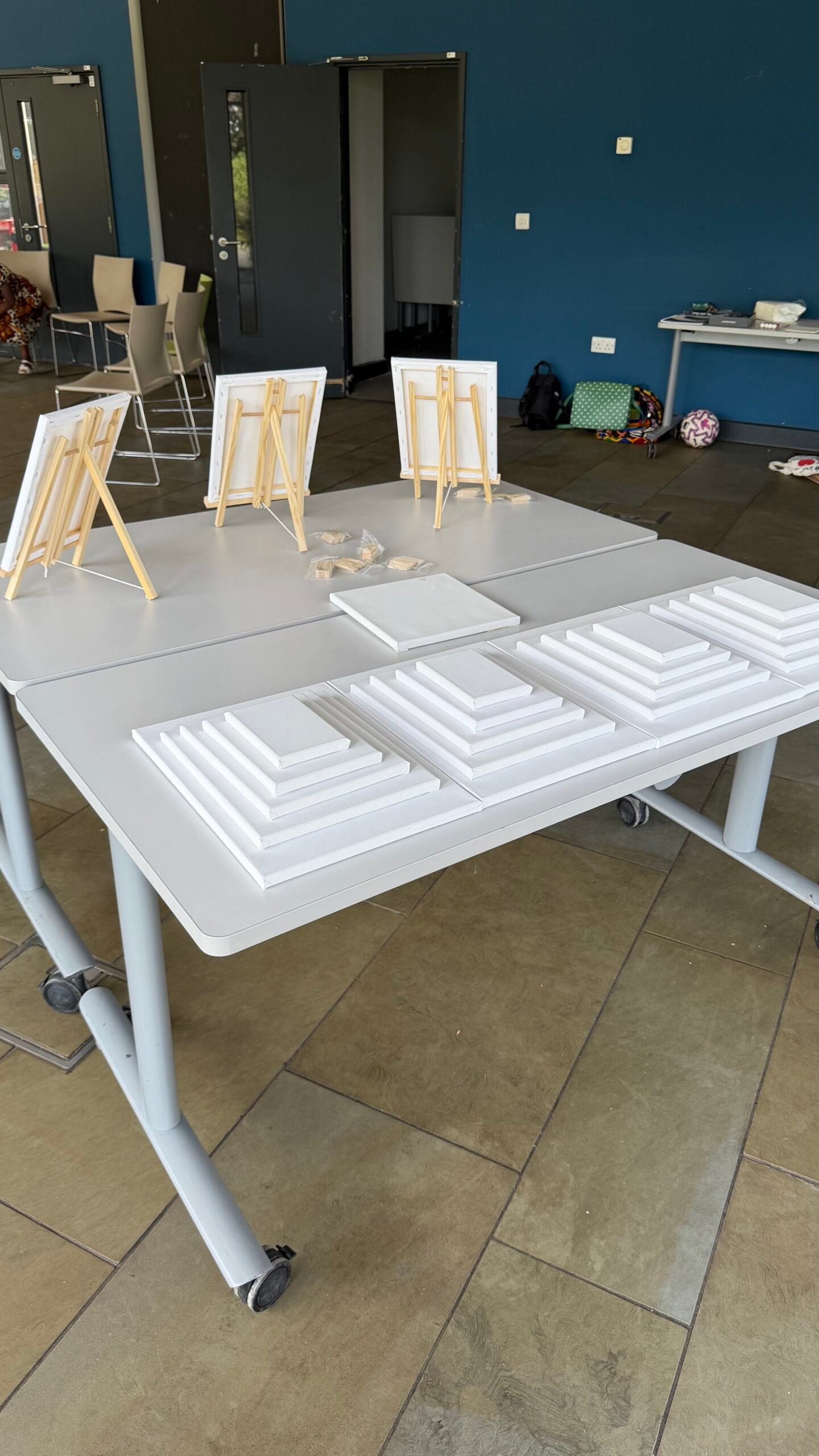
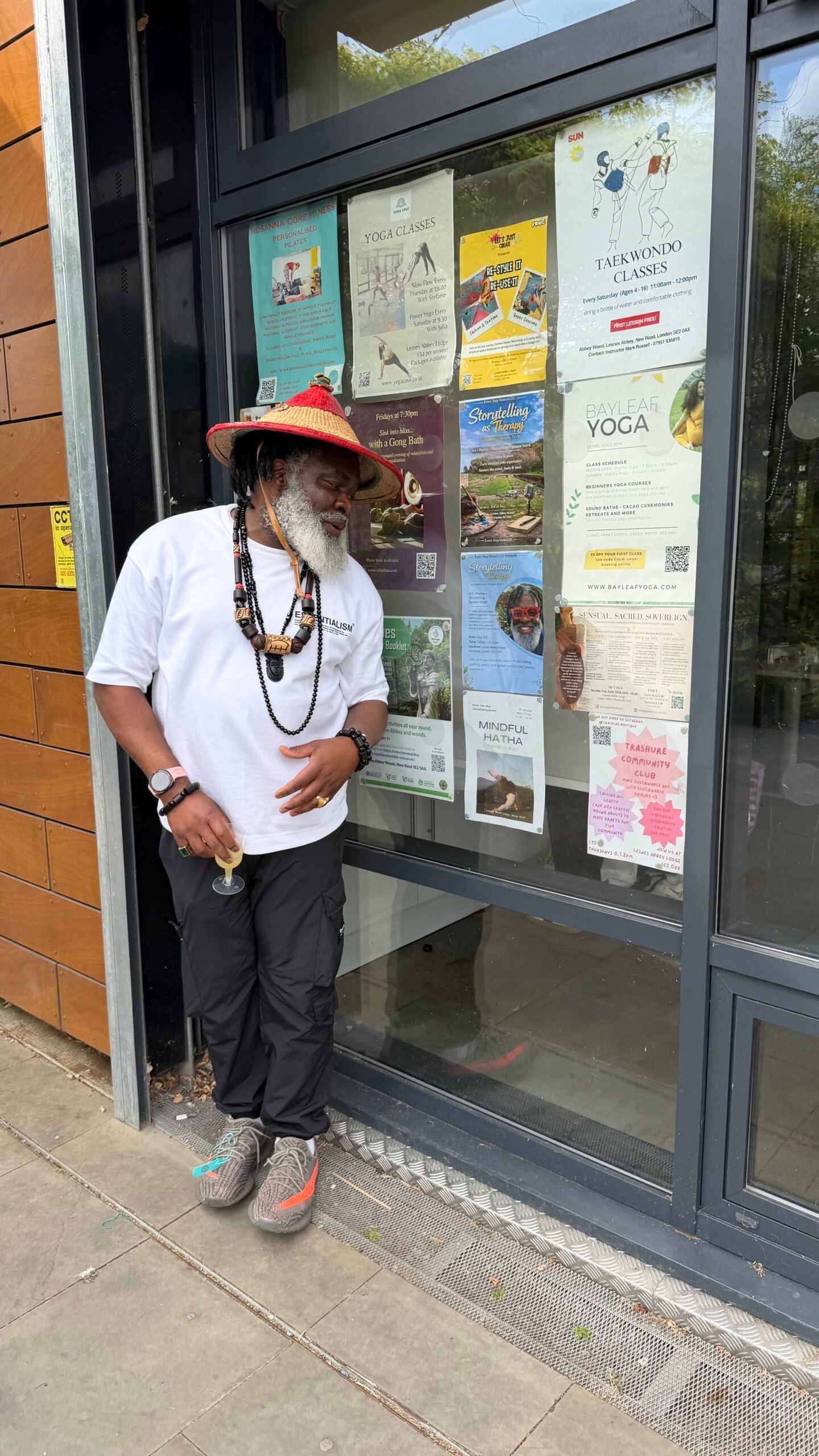
It was one of those mild May afternoons with a growing influence of community activities. Inside the hall at Lesnes Abbey Woods, trays of paint, brushes, and bits of bark and leaves we had gathered earlier were used to create art. Children came in first, drawn to setup and storytelling. Adults followed with tea, curiosity, and that soft openness that appears when a room feels safe.
The workshop, titled Storytelling as Therapy, was Jude Ukato’s idea. Jude has a way of holding a space that feels steady and unforced. Before social work, he was a poet published under Random House, and you can still feel that in him. The rhythm. The patience. The way he pays attention without making a show of it.
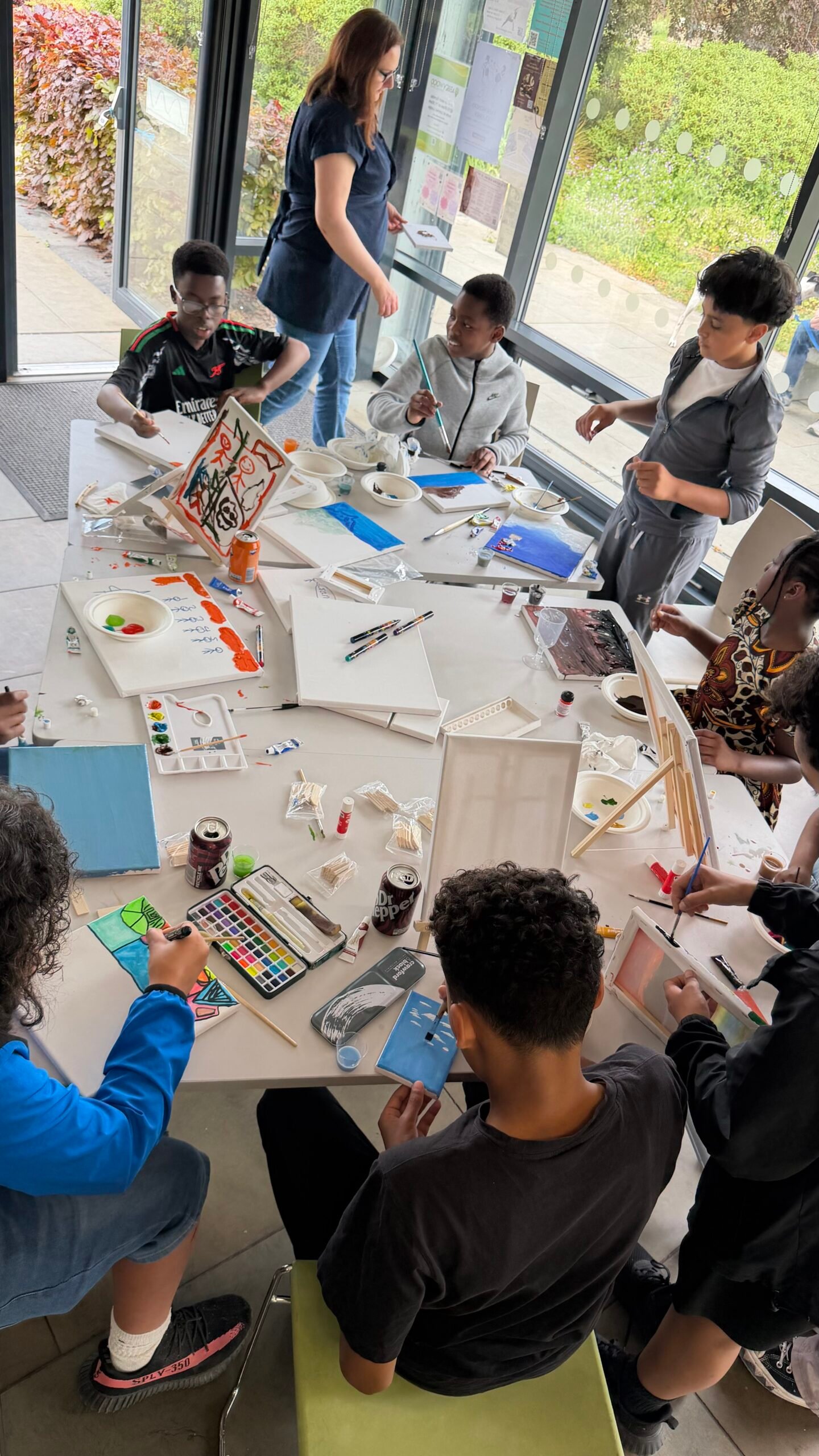
I opened the afternoon with stories. The children gathered around me in a loose circle, sensing something was about to happen. I read with the calm I’ve learned from years of writing and performing, and they responded immediately. Leaning in. Interrupting. Laughing. Following the story wherever it went. Parents watched from the edges, relieved to see their children absorbed by imagination instead of screens. Even people walking through the park paused at the doorway. Some stayed. Some joined. The room felt open and alive.
What struck me was how quickly the children recognised themselves in the stories. Their fear. Their curiosity. Their courage. I left space between sentences, letting silence do its own work. Storytelling has always been a way of gathering people without forcing them to name what they are feeling.
When the stories settled, the room shifted. Brushes appeared. Colours were mixed. Natural materials were spread across the tables. And then Ms Suluk Khalvati stepped forward, and the energy changed again. Deeper. Quieter. More intentional.
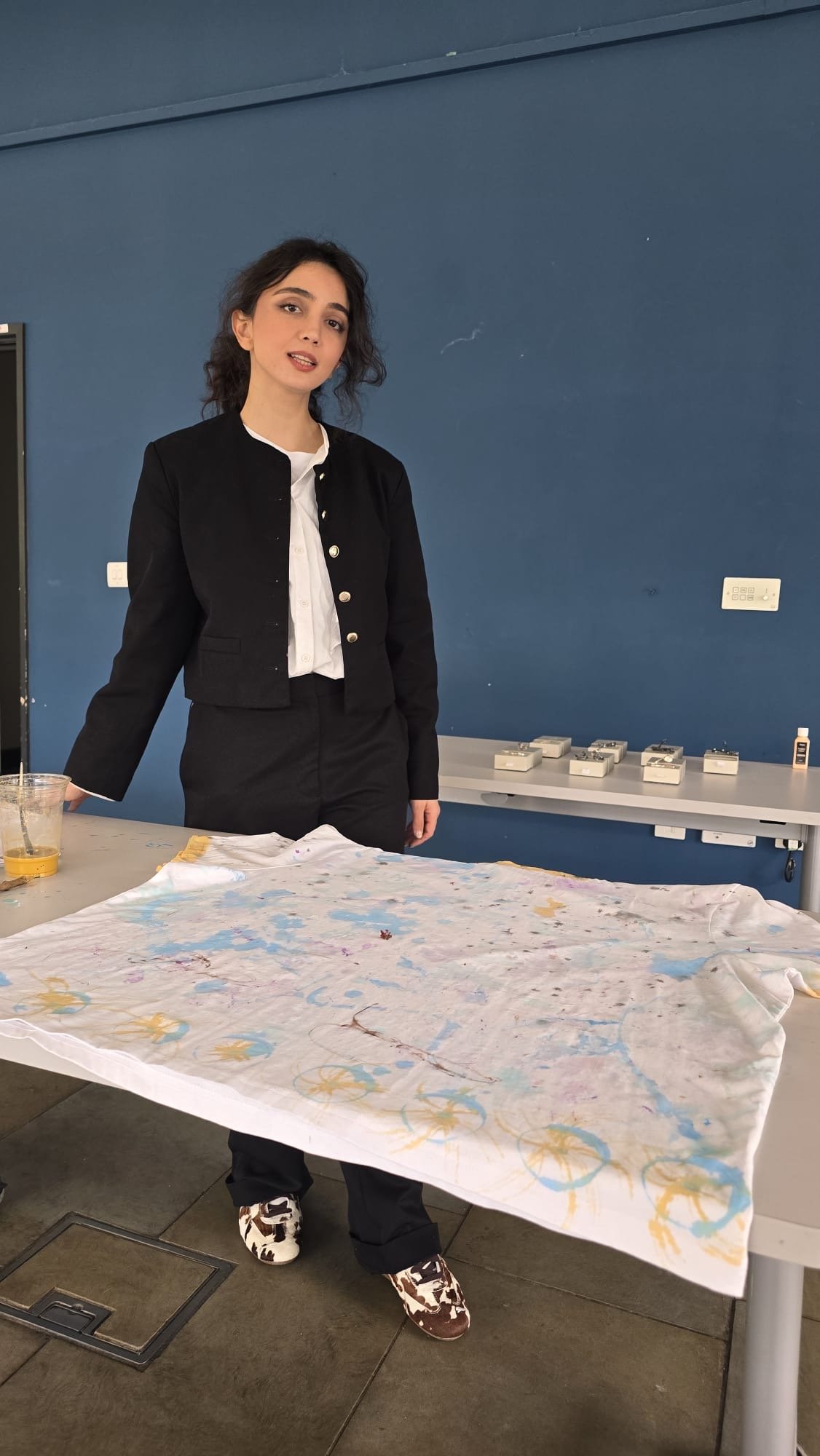
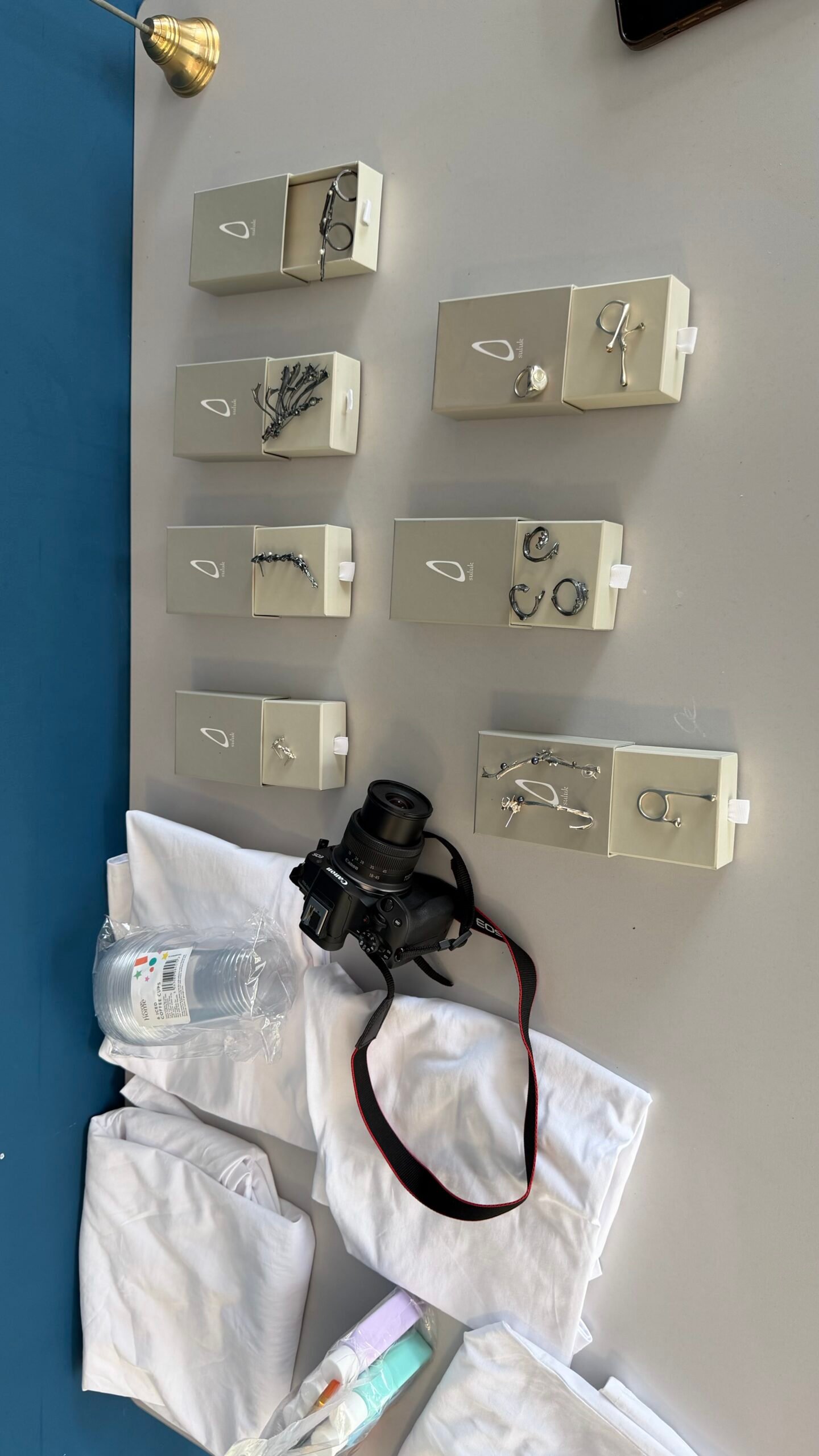
Ms Khalvati is an Iranian born, London based jewellery artist whose work sits at the intersection of scent, memory, and the body. She doesn’t just make jewellery. She makes vessels that hold emotion. She has a Distinction in MA Jewellery from the University for the Creative Arts, a background in Industrial Design, and a practice that moves between metalsmithing, glasswork, fragrance, and narrative design. Her work has travelled across the UK, UAE, and Iran, and she has been recognised by the Goldsmiths Craft and Design Council, New Ashgate Gallery, and other platforms that understand the value of artists who think with their hands.
At our event, she didn’t arrive as an expert. She arrived as someone ready to listen. She invited everyone to step outside and collect small natural objects that meant something to them. Stones. Leaves. Twigs. Bark. Nothing fancy. Just what the earth offered.
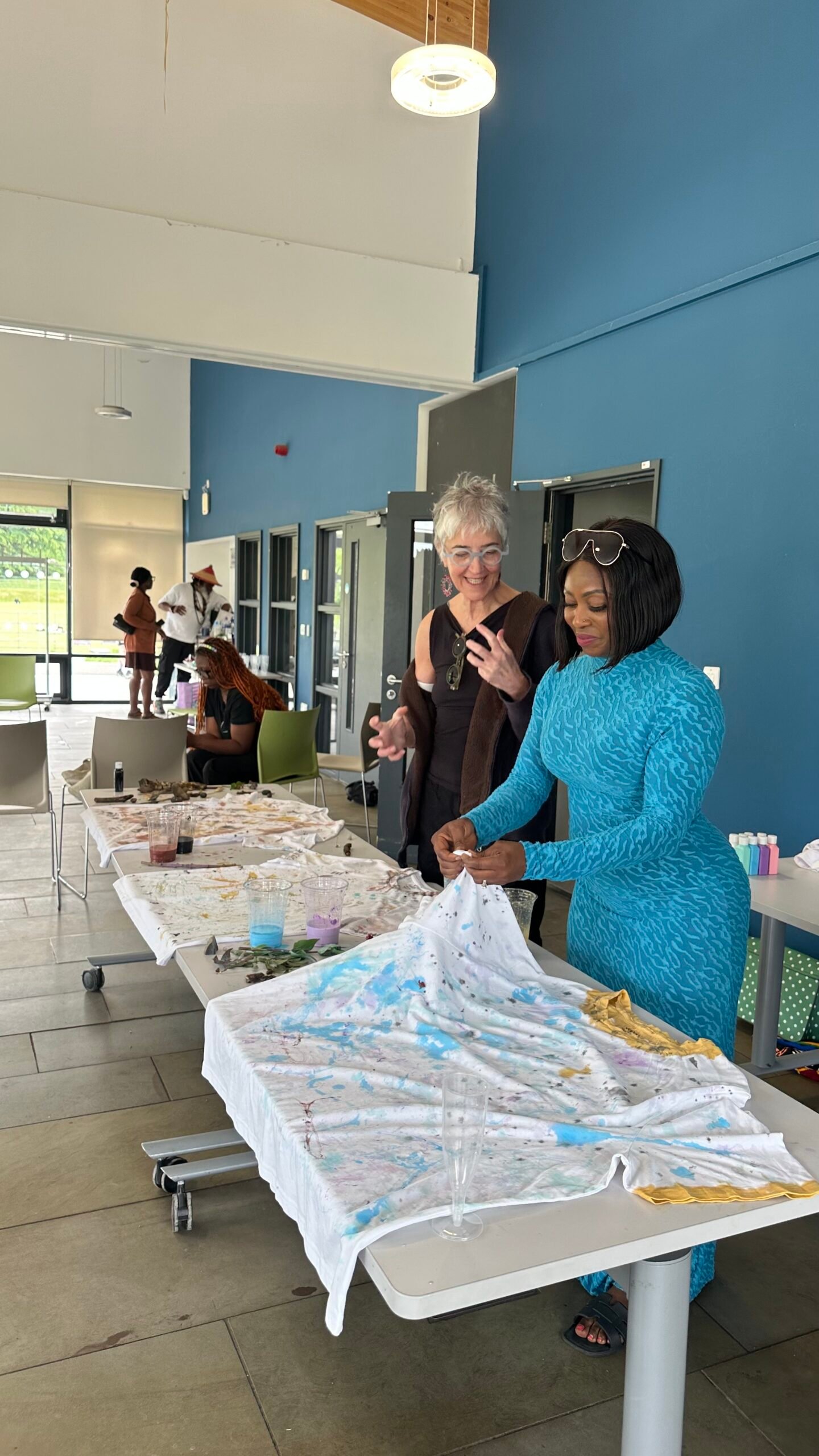
When they returned, she guided them into exploring three emotional states: fear, hope, and happiness. Her instructions were light but deliberate. She encouraged people to let movement and texture speak where words often fall short. And something shifted. Children worked with fearless spontaneity. Adults loosened. Leaves dipped in pigment. Twigs dragged across cotton. Stones pressed into fabric. Each gesture became a mark of feeling.
The tables turned into shared emotional landscapes, layered with different histories, cultures, and inner worlds. It wasn’t an art activity. It was a conversation in colour. A collective honesty you don’t often see in public spaces.
This is the heart of Ms Khalvati’s practice. Creativity as emotional language. Jewellery as memory. Art as a way of softening the boundaries between people. Her workshop mirrored everything she stands for. Intimacy. Sensory intelligence. A deep respect for the body’s quiet ways of remembering.
What emerged wasn’t a single artwork but a layered, living composition. Gestures overlapped. Meanings intertwined. The shirts people painted could easily be reimagined as wearable forms, pieces that hold movement, memory, and emotion close to the skin.
But the real magic wasn’t in the technique. It was in the sincerity. Nothing felt forced. People drifted between conversation and creation. Children painted while parents reflected. Strangers collaborated without needing shared language. The atmosphere was gentle, unhurried, deeply human.
As I watched families create side by side, my mind drifted home to Nigeria. To communities where life is vibrant but often strained by pressure, class divides, and the slow erosion of shared spaces. It made me wonder what might be possible if gatherings like this were encouraged more intentionally back home. Not as government programmes. Not as grand initiatives. Just simple, regular spaces where people come together to listen, make, reflect, and see one another without armour.
Events like this soften individualism. They loosen hierarchy. They create horizontal spaces where a child, a parent, a stranger, and an artist can sit at the same table and contribute equally. In societies where class often dictates proximity, these moments become small but powerful correctives. They build unity through shared experience, not slogans.
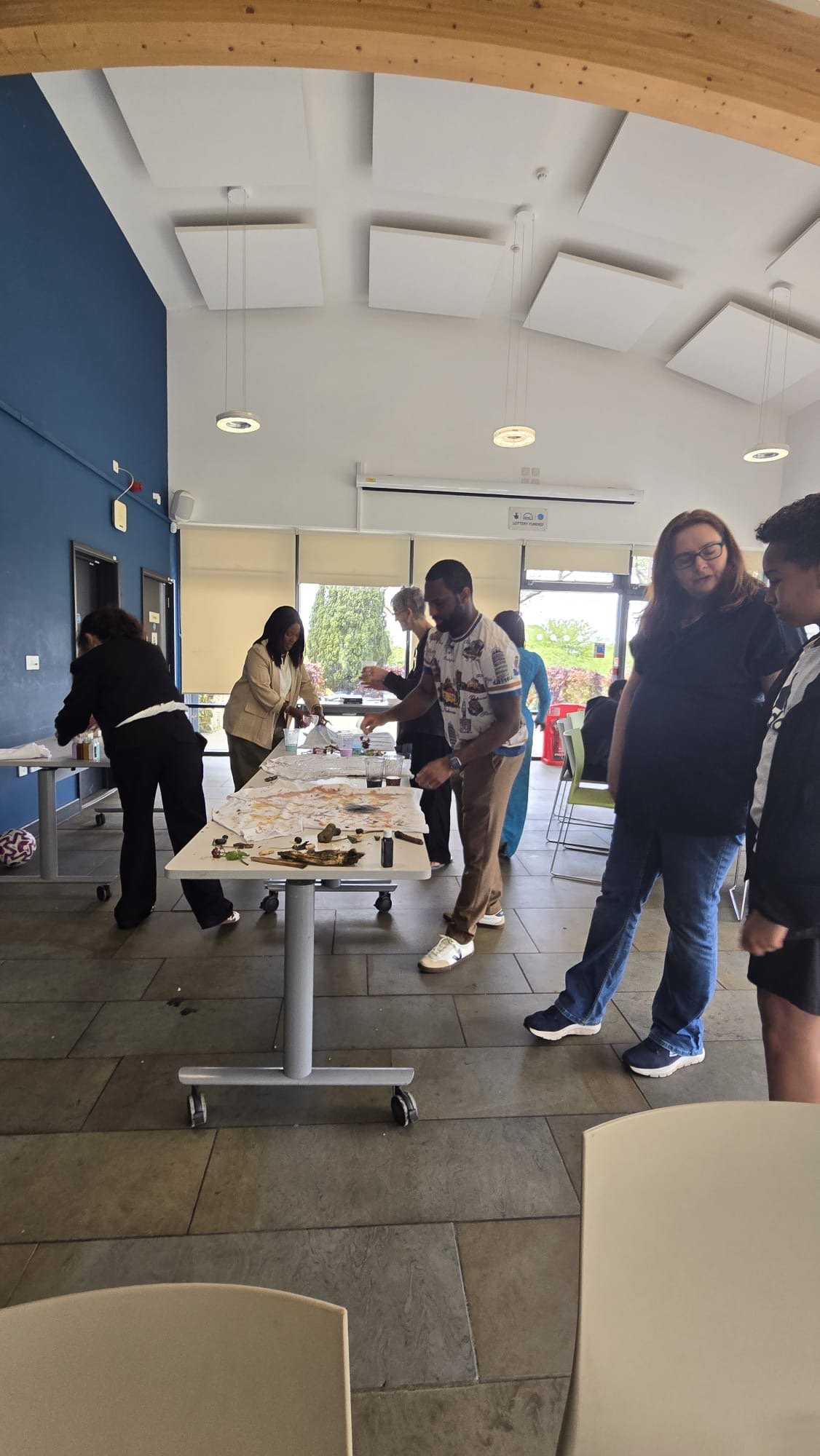
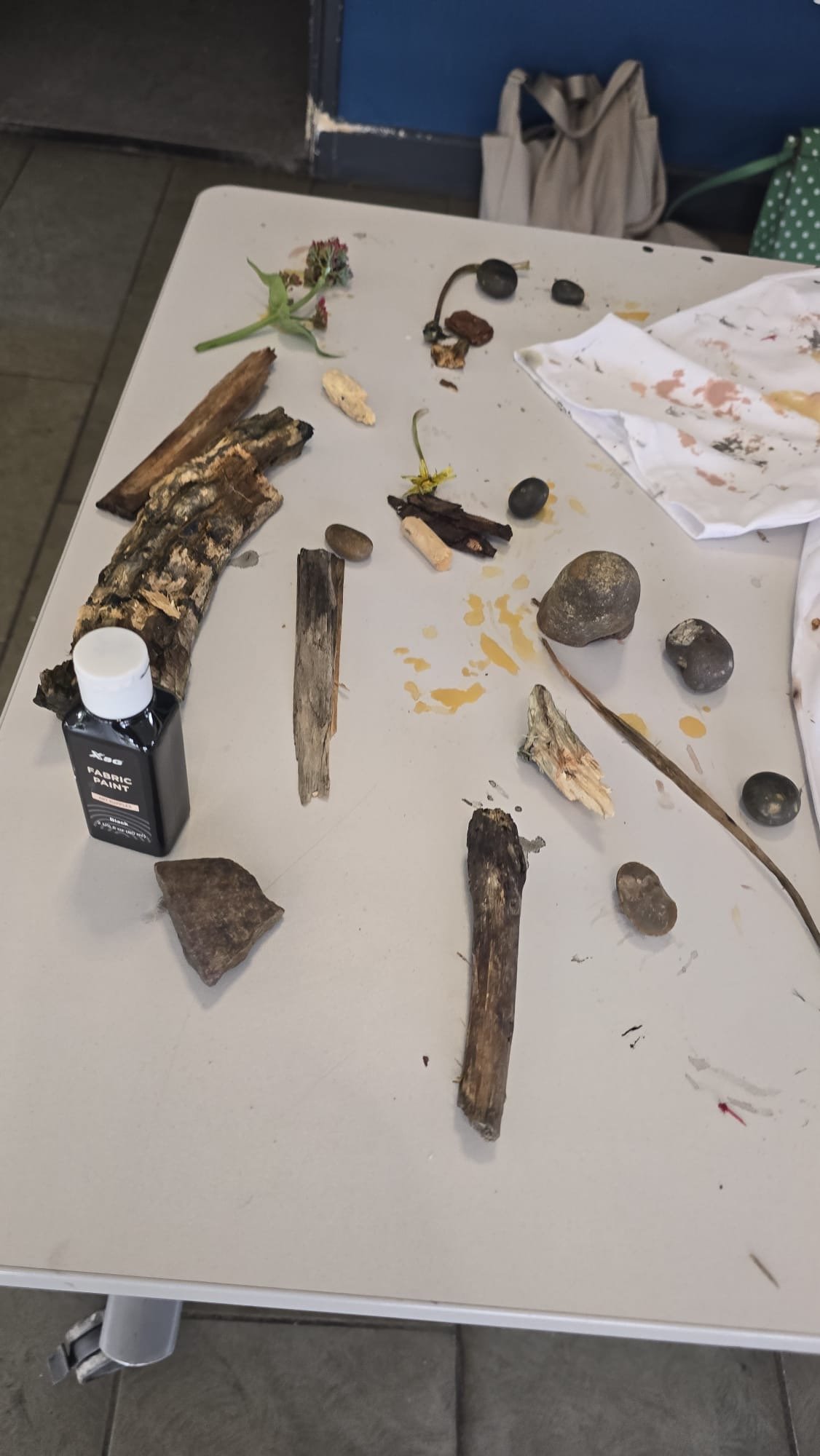
For Nigerians at home and abroad, the afternoon at Lesnes Abbey Woods offered a quiet lesson. Community is strengthened not only by infrastructure or policy but by the simple act of gathering with intention. Children learned to name emotions through colour and story. Parents rediscovered creativity without pressure. Diaspora families saw themselves reflected in the facilitators. And for a few hours, a public hall became a place where people could slow down, breathe, and make something together.
The collaboration worked because each person brought something distinct. Jude brought the grounding. I brought the spark. Ms Suluk Khalvati brought the emotional depth. Together, we created a space where creativity felt natural, accessible, and quietly transformative.
Writing this now, I realise how rare it is to witness an artist who can shift the emotional temperature of a room without raising her voice or demanding attention. Ms Suluk Khalvati did exactly that. Her presence, her method, and her way of guiding people into themselves deserve recognition beyond the walls of that hall. This report is part of that recognition. Her work is not only seen. It is felt. And it deserves to be documented, shared, and remembered.